The Anker SOLIX C300 DC is a compact 288Wh power station built for people who mainly charge phones, tablets, cameras, laptops, lights, and other USB- or DC-powered gear. Its biggest strength is portability; its biggest limitation is just as clear: the DC model does not provide a conventional household AC outlet.
Quick answer: Buy the C300 DC if you want a compact road-trip or camping battery centered on USB-C and 12V devices. Skip it if you need to plug in appliances, chargers with wall plugs, or anything that requires a normal AC receptacle.
Amazon disclosure: As an Amazon Associate, ACCGO may earn from qualifying purchases. Prices, coupons, sellers, bundles, and availability can change at any time.
Editorial note: This assessment is based on manufacturer documentation, published specifications, and the product’s practical use cases. ACCGO did not conduct a laboratory runtime test for this article.
Quick Verdict
| Buy it if… | Skip it if… |
|---|---|
| You mainly charge USB-C laptops, phones, tablets, cameras, and lights | You need household AC outlets |
| You want a battery small enough for a vehicle, tent, or day-trip bag | You expect to run a coffee maker, heater, or other high-power appliance |
| Quiet, fan-free DC charging matters | You want one power station for every emergency appliance |
| You understand the difference between the C300 DC and C300 AC | You prefer a simpler power bank with no app or solar features |
The C300 DC is not a miniature replacement for a home generator. It is better understood as a high-capacity, travel-friendly charging hub. For the right buyer, that narrower job is exactly what makes it appealing.
Key Specifications to Check
| Feature | What it means in practice |
|---|---|
| Battery capacity | 288Wh class, suitable for repeated mobile-device charging and moderate laptop use |
| Output type | USB and DC-focused; no standard AC outlet on the DC version |
| Charging options | Designed around USB-C, vehicle charging, and compatible solar input |
| App support | Useful for checking status and adjusting supported settings |
| Intended use | Road trips, camping, creator gear, mobile work, and light emergency charging |
Always verify the current U.S. product listing before buying. Anker sells similarly named C300 models, and specifications for the AC and DC versions should not be mixed.
The Main Question: Can You Live Without AC Outlets?
This is the decision that matters most.
Many portable power stations are designed around a built-in inverter that converts battery power into household-style AC electricity. The C300 DC takes a different approach. By focusing on USB-C and direct-current outputs, it avoids pretending to be a small appliance generator.
That works well when your packing list includes:
- USB-C laptops and tablets
- phones and wireless earbuds
- cameras, drones, and action-camera batteries charged by USB
- USB-powered camp lights
- compatible 12V accessories
- mobile hotspots and small travel electronics
It becomes a poor fit when your equipment still depends on a wall plug. Before buying, list every device you expect to connect and inspect the plug on each one. If even one essential device requires AC, compare the standard Anker SOLIX C300 or another power station with an inverter.
Portability and Road-Trip Use
The strongest reason to choose a battery in this class is that it can live in the car without taking over the cargo area. It is more substantial than an ordinary phone power bank but easier to move than a large backup-power unit.
For road trips, that middle ground is useful. A family can recharge several personal devices at a rest stop, while a photographer or remote worker can keep a laptop, camera batteries, and hotspot running away from a hotel room.
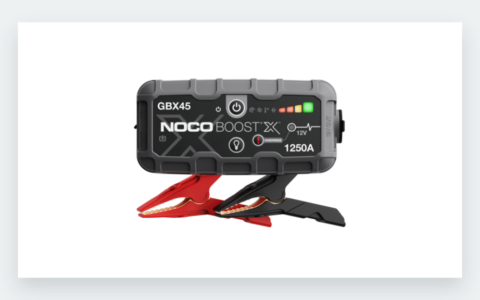
It also complements a sensible vehicle kit. ACCGO’s Fanttik X9 Pro review covers a compact tire inflator, while the NOCO Boost X GBX45 review looks at a dedicated jump starter. Those products solve different problems: the C300 DC handles everyday electronics, the inflator handles low tire pressure, and the jump starter is reserved for a weak vehicle battery.
USB-C Charging Is the Real Selling Point
A DC-focused power station makes the most sense when USB-C already sits at the center of your gear. Modern laptops, phones, tablets, cameras, and handheld gaming systems increasingly share the same charging standard.
That reduces the number of wall adapters you need to pack and avoids the efficiency loss involved in converting battery power to AC and then back to DC through a device charger. Real charging speed still depends on the port, cable, device, temperature, and how many outputs are being used at once.
Use properly rated USB-C cables, especially for laptops. A cable that works for a phone may not support the higher power requested by a computer.
Capacity and Realistic Runtime Expectations
A 288Wh rating is a useful comparison number, not a promise that every watt-hour reaches your device. Conversion losses, cable resistance, temperature, battery-management overhead, and standby power all reduce usable energy.
That means runtime estimates should be presented as ranges rather than guarantees. The C300 DC is appropriate for multiple phone charges, several laptop top-ups, or a mixed day of small electronics. It is not designed to operate heat-producing appliances or replace a high-capacity home-backup system.
For readers shopping primarily for outage preparation, link to ACCGO’s Best Portable Power Stations on Amazon for Camping and Outages guide. That comparison is a better place to evaluate larger AC-equipped models.
Vehicle and Solar Charging
Flexible recharging matters on a multi-day trip. Vehicle charging can help replenish the battery while driving, while compatible solar charging can extend off-grid use in favorable conditions.
Solar input should not be treated as guaranteed daily energy. Panel angle, shade, clouds, heat, cable choice, and available daylight all affect results. Buyers should verify connector compatibility and supported input limits before ordering a third-party panel.
Never leave a battery charging in a dangerously hot closed vehicle. Follow Anker’s temperature and storage guidance, keep ventilation areas clear, and protect the unit from water.
C300 DC vs C300 AC
| Choose the C300 DC when… | Choose an AC-equipped C300 when… |
|---|---|
| Your devices charge directly by USB-C or 12V | You need household-style outlets |
| Lower weight and simpler mobile charging matter | Appliance compatibility matters more than minimum size |
| You want a travel charging hub | You want a more general emergency power station |
| You are comfortable checking every device connection | You do not want to reorganize around USB-C |
Do not choose only by price. The wrong output type can make a cheaper battery useless for your actual equipment.
What the C300 DC Does Well
- Packs more energy than a conventional pocket power bank
- Centers the experience on modern USB-C devices
- Fits road-trip, camping, mobile-work, and creator workflows
- Avoids paying for an inverter if you genuinely do not need AC
- Supports more flexible recharging than a basic power bank
Where It Falls Short
- No conventional AC outlet on the DC model
- Product naming can be confusing next to the AC version
- Too small for serious home backup
- Solar performance depends heavily on real conditions
- Buyers may need new high-power USB-C cables or adapters
Who Should Buy the Anker SOLIX C300 DC?
It is best for travelers, campers, photographers, students, and remote workers whose equipment already charges through USB-C. It is also useful as a secondary household battery for communications and small electronics during short outages.
Skip it if your plan starts with a refrigerator, microwave, coffee machine, medical appliance, or other AC device. Power requirements for essential medical equipment should always be confirmed with the equipment manufacturer and a qualified professional.
Building a Complete Road-Trip Setup
Power is only one part of a practical vehicle kit. Readers carrying food and drinks can continue to ACCGO’s Igloo Iceless 40 Qt Cooler review. Dog owners should also read the Ruffwear Load Up Dog Car Harness review before planning a long drive with a pet.
These products should be evaluated separately. Do not assume the power station can operate a particular cooler or accessory until voltage, connector, current draw, surge behavior, and manufacturer guidance have all been verified.
Final Verdict
The Anker SOLIX C300 DC is worth shortlisting when you want more capacity than a normal power bank but do not need AC outlets. Its appeal is not unlimited power; it is a focused combination of portability, USB-C charging, and travel flexibility.
For USB-first gear, that focus can be a strength. For mixed household equipment, the absence of AC is a deal-breaker. Check your device list before checking the price.
FAQ
Does the Anker SOLIX C300 DC have an AC outlet?
No. The DC version is designed around USB and DC outputs. Buyers who require household-style outlets should compare the AC-equipped C300 model.
Can it charge a laptop?
It can charge compatible USB-C laptops when the selected port and cable support the laptop’s required power. Verify the laptop’s charging specification before travel.
Is it good for camping?
Yes, when the camping setup consists mainly of phones, cameras, laptops, lights, and compatible DC accessories. It is not intended for high-power cooking or heating appliances.
Can it be charged from solar panels?
The model supports compatible solar charging, but buyers should confirm panel voltage, connector, and supported input specifications. Actual solar output varies with conditions.
Is it better than a regular power bank?
It offers much more capacity and broader connectivity than a pocket power bank, but it is larger and more expensive. A small power bank remains more convenient for a single phone.
By Kevin; Accgo doesn’t simply review products—we look at whether they genuinely make everyday life easier.