As an Amazon Associate, ACCGO may earn from qualifying purchases. Prices, coupons, sellers, colors, sizes, and availability can change at any time.
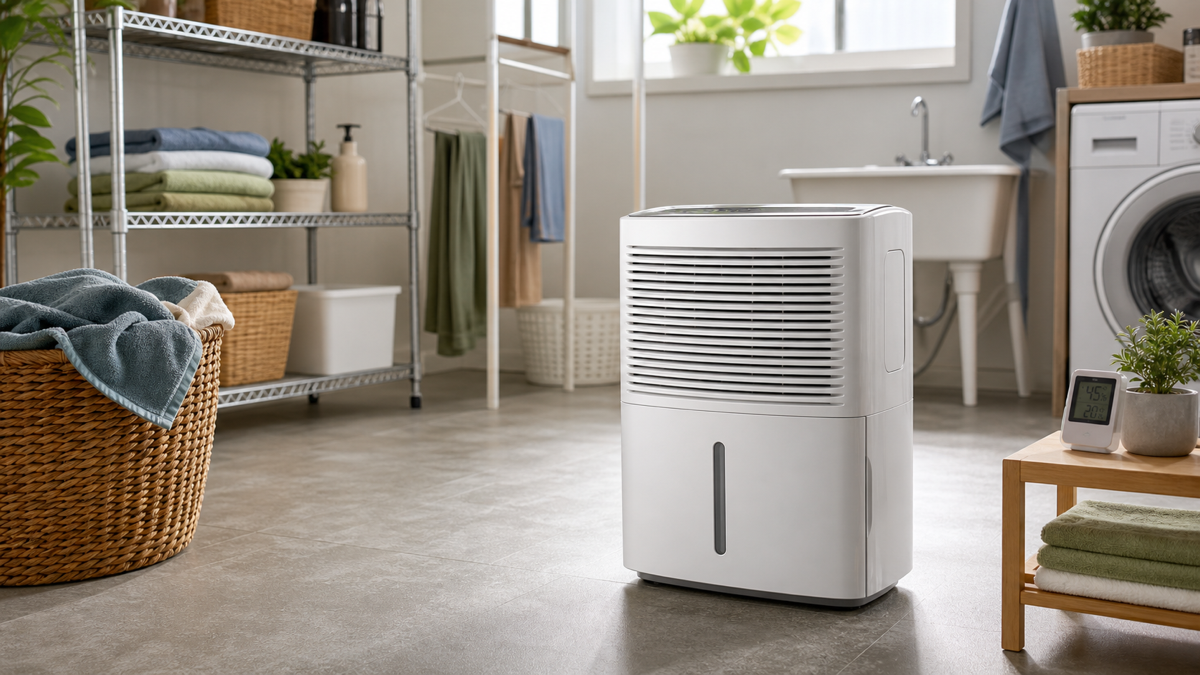
The best dehumidifier on Amazon depends on where the moisture problem is. Choose a Frigidaire Gallery-style 50-pint model for large spaces with a floor drain, a Honeywell 50-pint pump model for basements that need vertical drainage, a Midea Cube-style unit for flexible storage and smart controls, a TCL 50-pint smart dehumidifier if you want pump drainage at a value price, a Black+Decker 30-pint model for moderate rooms, and a Breezome-style compact unit for bathrooms, closets, RVs, and small bedrooms.
Do not buy a dehumidifier only because it has the biggest number on the box. Match capacity, drainage, noise, bucket size, and room placement to the actual space you need to dry.
- Check Frigidaire Gallery 50-pint dehumidifier on Amazon
- Check Honeywell 50-pint dehumidifier with pump on Amazon
- Check Midea Cube dehumidifier on Amazon
- Check TCL 50-pint smart dehumidifier with pump on Amazon
- Check BLACK+DECKER 30-pint dehumidifier on Amazon
- Check BREEZOME small dehumidifier on Amazon
Related ACCGO reads: Best Air Purifiers for Wildfire Smoke, Best Cooling Sheets on Amazon, and Amazon Under-Sink Organizer Deals.
Best Dehumidifiers: Short Answer
| Pick type | Best for | Why it makes sense |
|---|---|---|
| Frigidaire Gallery-style 50-pint model | Large rooms with gravity drain access | Strong capacity and smart-home style features |
| Honeywell 50-pint with pump | Damp basements | Pump drainage is useful when there is no convenient floor drain |
| Midea Cube-style dehumidifier | Flexible storage and smart monitoring | Bucket design and app-style control can be convenient |
| TCL 50-pint smart dehumidifier | Value pump option | Large-space capacity with smart features to compare |
| BLACK+DECKER 30-pint model | Moderate bedrooms or living areas | Smaller than a 50-pint basement unit but still practical |
| Breezome-style compact dehumidifier | Bathrooms, closets, RVs, tiny rooms | Small, quiet, and easier to place in tight spaces |
How to Choose a Dehumidifier
Start with room type. A basement dehumidifier has a different job than a small bathroom dehumidifier. Basements may need more capacity, auto-defrost, continuous drainage, and pump options. Bedrooms need quieter operation. Bathrooms and closets need compact placement.
Then check drainage. If the unit will sit near a floor drain, gravity drainage may be enough. If the water needs to go up into a laundry sink or out through a higher drain path, compare pump models.
Finally, check bucket size and weight. A full bucket can be heavy. If you do not want to empty water often, capacity and drainage setup matter more than a lower price.
Best Large-Space Pick: Frigidaire Gallery-Style 50-Pint Dehumidifier
A Frigidaire Gallery-style 50-pint dehumidifier is a good first comparison for larger rooms, finished basements, open living areas, and damp spaces where you want strong moisture removal.
This type of unit makes the most sense when you have a clear place to put it, enough clearance around the intake and exhaust, and either a bucket-emptying routine or a gravity-drain setup.
The tradeoff is size and noise. Large dehumidifiers are usually more noticeable than compact bathroom units, so placement matters.
Best Basement Pump Pick: Honeywell 50-Pint Dehumidifier With Pump
A Honeywell 50-pint model with a pump is worth comparing if your basement does not have a convenient floor drain. A built-in pump can move collected water upward or across a short distance, depending on the included hose setup and current model instructions.
This type of model is best for basements, laundry rooms, utility rooms, and damp lower-level spaces where manual bucket emptying would become annoying.
Before buying, check pump height, hose details, auto-defrost, filter access, and whether the unit has a humidistat you can set.
Best Flexible Design: Midea Cube-Style Dehumidifier
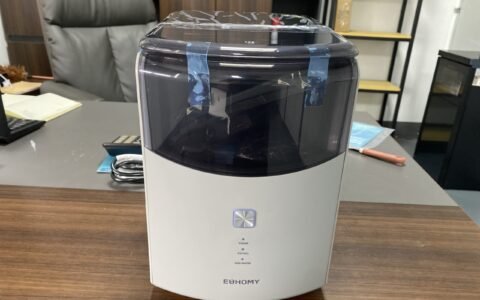
A Midea Cube-style dehumidifier is appealing because it approaches storage and bucket capacity differently from a standard upright dehumidifier. For some homes, that can make the unit easier to store or monitor.
This is a good direction if you like smart controls, want to compare bucket capacity carefully, and care about how the appliance fits into a real room.
Check the exact size and setup steps before buying. A clever design is useful only if it is easy for your household to lift, drain, clean, and maintain.
Best Value Smart Pump Option: TCL 50-Pint Smart Dehumidifier
A TCL 50-pint smart dehumidifier with a pump is worth comparing if you want large-space drying plus smart features without automatically choosing the most expensive model.
This type of unit is a practical match for basements, laundry rooms, and larger damp rooms. The pump feature is the key reason to compare it.
Before checkout, confirm pump hose details, warranty terms, dimensions, and whether the app features matter to you. If you will never use an app, a simpler model may be enough.
Best Moderate-Room Pick: BLACK+DECKER 30-Pint Dehumidifier
A BLACK+DECKER 30-pint model is a more balanced choice for moderate spaces where a big 50-pint basement unit feels excessive.
It can make sense for bedrooms, offices, small living rooms, and apartments with seasonal humidity. The smaller size may be easier to move and store.
The tradeoff is capacity. If the room is very damp or large, a 30-pint class unit may run more often than a larger model.
Best Small-Space Pick: Breezome-Style Compact Dehumidifier
A Breezome-style small dehumidifier is best for tiny rooms, bathrooms, closets, laundry nooks, RVs, and small storage spaces. It is not a substitute for a basement dehumidifier, but it can help in places where a full-size appliance would be awkward.
Look for tank capacity, auto shutoff, noise level, and physical dimensions. Small dehumidifiers are often bought for convenience, so make sure the design matches the spot you want to use.
What to Check Before Buying
Measure the room first, then check capacity. If the space is large, cold, or very damp, a small countertop-style dehumidifier will not solve the problem quickly.
Check drainage second. Bucket-only units are fine for occasional use, but continuous drainage is better for basements and laundry rooms.
Check noise third. A dehumidifier in a basement can be louder than one used near a bed or home office.
Also remember that a dehumidifier helps control moisture, but it does not fix leaks, drainage problems, roof issues, or serious mold contamination by itself.
FAQ
What size dehumidifier do I need?
For large damp spaces and basements, compare 50-pint class models. For moderate rooms, a 30-pint class model may be enough. For tiny bathrooms and closets, a compact unit can be more practical.
Is a pump worth it on a dehumidifier?
A pump is worth considering if you cannot drain water by gravity and do not want to empty the bucket frequently.
Can a dehumidifier remove mold?
A dehumidifier can help reduce moisture that supports mold growth, but it does not remove existing mold or fix the source of water intrusion.
What should I check before buying on Amazon?
Check capacity, room-size guidance, pump or gravity-drain options, bucket size, noise level, dimensions, filter access, seller, coupon, delivery date, and return terms.
Best dehumidifier picks
Quick Amazon Shopping Links
Use these tracked Amazon U.S. links to check the current listing, seller, coupon, color, size, and availability before buying.
By Kevin; Accgo doesn’t simply review products—we look at whether they genuinely make everyday life easier.