Smartphones have become good enough that many people stopped carrying dedicated cameras years ago.
Then something interesting happened.
Creators started shooting more video. Travelers wanted better zoom and battery life. Hobby photographers wanted more control over image quality. Parents wanted something faster than pulling out a phone every few seconds.
As phone cameras improved, dedicated cameras shifted toward doing things phones still struggle with: larger sensors, interchangeable lenses, faster autofocus systems, stronger low-light performance, and better video tools.
The question today isn’t whether digital cameras are still worth buying.
It’s which one actually fits how you shoot
Our Top Picks at a Glance
| Camera | Best For | Sensor | Video | Rating |
|---|---|---|---|---|
| Sony A7 IV | Overall Best | Full Frame | 4K 60fps | ★★★★★ |
| Canon R10 | Beginners | APS-C | 4K | ★★★★½ |
| Fujifilm X-T5 | Photography | APS-C | 6.2K | ★★★★½ |
| Sony ZV-E10 II | Content Creators | APS-C | 4K | ★★★★½ |
| Nikon Z8 | Professionals | Full Frame | 8K | ★★★★★ |
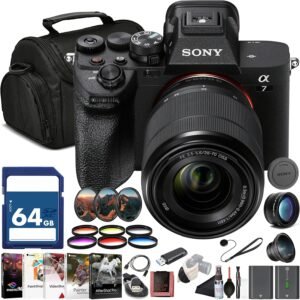
Best Overall: Sony A7 IV
Why We Picked It
Sony’s A7 series has been popular for years because it sits in a comfortable middle ground.
The A7 IV doesn’t try to be the fastest sports camera or the highest-resolution studio camera. Instead, it does almost everything well.
Image quality remains excellent, autofocus is extremely reliable, and video features are strong enough for creators without becoming overwhelming.
For many users, it feels like the camera you can buy and keep using for years.
Pros
✓ Excellent autofocus tracking
✓ Strong photo and video balance
✓ Wide lens ecosystem
✓ Reliable battery performance
Cons
✗ Premium price
✗ Menu system still takes time to learn
Who It’s For
Buy this if you want one camera capable of handling travel, family photos, content creation, and general photography without obvious compromises.
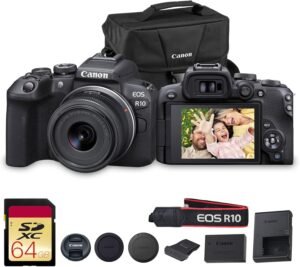
Best Camera for Beginners: Canon R10
Why We Picked It
New photographers often buy too much camera.
The R10 avoids that problem.
Canon keeps the controls approachable while still delivering fast autofocus and image quality that leaves plenty of room to grow.
It feels less intimidating than many enthusiast cameras.
Pros
✓ Easy learning curve
✓ Fast subject detection
✓ Lightweight design
✓ Good value
Cons
✗ Battery life could be better
✗ Limited native lens selection
Who It’s For
People moving from smartphones into dedicated cameras for the first time.
Best for Photography: Fujifilm X-T5
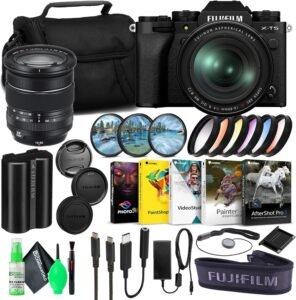
Why We Picked It
Fujifilm cameras have always had a different personality.
Instead of chasing pure specifications, they focus heavily on shooting experience.
Physical dials, film simulations, and strong color science make photography feel more intentional.
Many photographers simply enjoy using it.
Pros
✓ Excellent image quality
✓ Strong color rendering
✓ Compact design
✓ Physical controls feel natural
Cons
✗ Autofocus still trails Sony slightly
Who It’s For
Photographers who care more about taking photos than shooting video.
Best for Content Creators: Sony ZV-E10 II
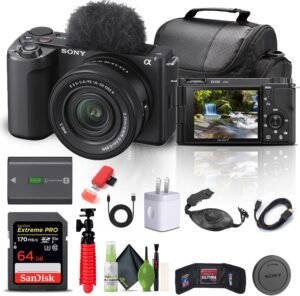
Why We Picked It
Creator-focused cameras have become their own category.
The ZV-E10 II prioritizes practical features that matter for creators:
Fast face tracking.
Reliable autofocus.
Compact size.
Simple operation.
Pros
✓ Excellent autofocus
✓ Compact body
✓ Strong video features
✓ Creator-focused tools
Cons
✗ No viewfinder
Who It’s For
YouTubers, vloggers, and short-form content creators.
Best Professional Choice: Nikon Z8
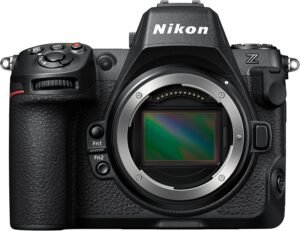
Why We Picked It
The Z8 feels like a flagship camera without flagship size.
Its autofocus system, burst shooting speed, and video capabilities make it suitable for demanding professional work.
Pros
✓ Outstanding image quality
✓ Powerful autofocus
✓ Strong video performance
✓ Excellent handling
Cons
✗ Expensive
✗ Larger body
Who It’s For
Professional photographers and advanced enthusiasts.
What to Consider Before Buying a Digital Camera
Sensor Size
Larger sensors usually improve image quality and low-light performance.
Common categories include:
APS-C
Full Frame
Micro Four Thirds
For most users, APS-C remains a practical starting point.
Interchangeable Lens vs Fixed Lens
Interchangeable lens systems provide flexibility.
Fixed lens cameras simplify the experience.
Neither approach is universally better.
Video Features
If video matters, pay attention to:
- Resolution
- Frame rates
- Stabilization
- Recording limits
- Microphone support
Battery Life
Battery specifications often look good on paper.
Real-world use can be different.
Heavy video recording and wireless features drain batteries faster than expected.
Frequently Asked Questions
Are digital cameras still worth buying?
Yes.
Smartphones continue improving, but dedicated cameras still offer advantages in image quality, lens flexibility, and creative control.
Which camera is best for beginners?
Models that balance simplicity and performance usually make better starting points.
Full-frame or APS-C?
Most people do not need full-frame immediately.
APS-C often provides better value.
Are mirrorless cameras replacing DSLRs?
For most users, mirrorless systems have become the default choice.
Accgo Verdict
The best digital camera isn’t necessarily the most expensive one.
It’s the one that fits naturally into how you shoot.
The more often you want to bring a camera with you, the more valuable it becomes.
By Kevin; Accgo doesn’t simply review products—we look at whether they genuinely make everyday life easier.